Russia Pneumonic Plague Alert: What Happened in Irkutsk and Should You Be Concerned?
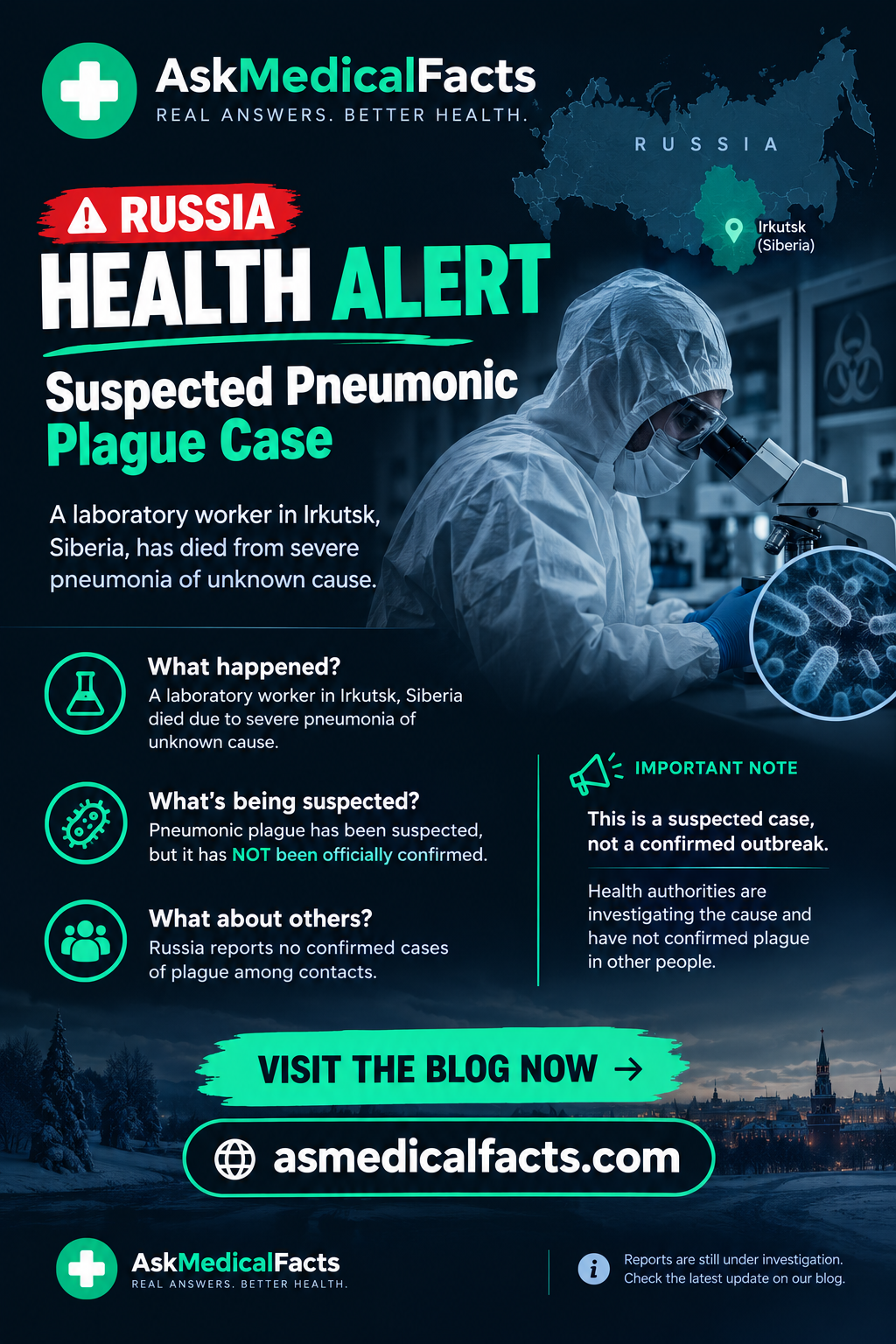
A laboratory worker in Irkutsk, Siberia has died from severe pneumonia of unknown cause, with pneumonic plague suspected. Here's what we know, what plague actually is, and why experts say this is not a global threat.
Medical Disclaimer: This article is for informational purposes only and does not constitute medical advice. Always consult a qualified healthcare professional for diagnosis and treatment.
Health authorities in Russia are investigating the death of a laboratory worker in Irkutsk, Siberia, who died from severe pneumonia of unknown origin. Pneumonic plague has been named as a suspected cause — though as of now, it has not been officially confirmed.
Here's a clear, factual breakdown of what happened and what it means for public health.
What Happened in Irkutsk?
A laboratory worker based in Irkutsk, a city in eastern Siberia, died after developing severe pneumonia. Russian health authorities launched an investigation into the cause of death. Pneumonic plague — the most dangerous form of plague — was flagged as a suspected diagnosis based on the clinical presentation.
Crucially, no other confirmed cases of plague have been reported among the deceased worker's contacts. Russian authorities have stated they are monitoring the situation and investigating the source of the infection.
What Is Pneumonic Plague?
Plague is caused by the bacterium Yersinia pestis. There are three main forms:
- Bubonic plague — the most common form, spread by flea bites, causes swollen lymph nodes (buboes)
- Septicemic plague — infection enters the bloodstream directly
- Pneumonic plague — infects the lungs, and is the only form that can spread person-to-person through respiratory droplets
Pneumonic plague is the most severe form. Without prompt antibiotic treatment, it can be fatal within 24 to 72 hours of symptom onset.
Is Plague Rare?
Plague still exists in nature — it circulates in rodent populations across parts of Central Asia, Africa, and the Americas. Siberia has historically been one of the regions where Yersinia pestis is present in wildlife reservoirs.
The WHO typically records a few hundred cases globally per year, mostly in Madagascar, the Democratic Republic of Congo, and Peru. Isolated cases in Siberia, Mongolia, and China are not unprecedented — they are usually linked to contact with infected animals or fleas.
Symptoms of Pneumonic Plague
- Sudden onset of fever, chills, and headache
- Rapid development of severe pneumonia
- Chest pain and difficulty breathing
- Coughing — sometimes with bloody or watery mucus
- Nausea and vomiting
Symptoms appear 1 to 3 days after exposure. Early antibiotic treatment (streptomycin, gentamicin, or doxycycline) is highly effective if started promptly.
Why a Lab Worker?
Laboratory workers who handle samples from wildlife or work with infectious disease specimens are at elevated occupational risk. Irkutsk is home to research institutes that study endemic infections in Siberian wildlife populations. This context may explain the exposure — though the exact source is still under investigation.
Should the World Be Worried?
No — not at this stage. Here's why:
- This is a single suspected case, not a confirmed outbreak
- No human-to-human transmission has been reported among contacts
- Plague is a well-understood bacterial infection — unlike novel viruses, we have effective antibiotics and established containment protocols
- The WHO and international health bodies have not issued any travel advisories or emergency declarations
Pneumonic plague is serious, but it is not highly contagious under normal circumstances. It requires close contact with an infected person's respiratory droplets — casual exposure does not typically result in transmission.
What Authorities Are Doing
- Russian health authorities are investigating the source of the infection
- Contacts of the deceased are being monitored
- A cause-of-death confirmation process is ongoing — plague has not yet been officially confirmed
Bottom Line
A death from suspected pneumonic plague in Siberia is alarming on the surface — but the facts tell a more measured story. This appears to be an isolated occupational exposure in a region where plague naturally exists in wildlife. There is no evidence of spread to other people, no confirmed diagnosis yet, and no reason for international concern at this time.
We will update this article as official findings are released.
If you are traveling to regions where plague is endemic and develop sudden fever, chest pain, or difficulty breathing, seek emergency medical care immediately and inform doctors of your travel history.